
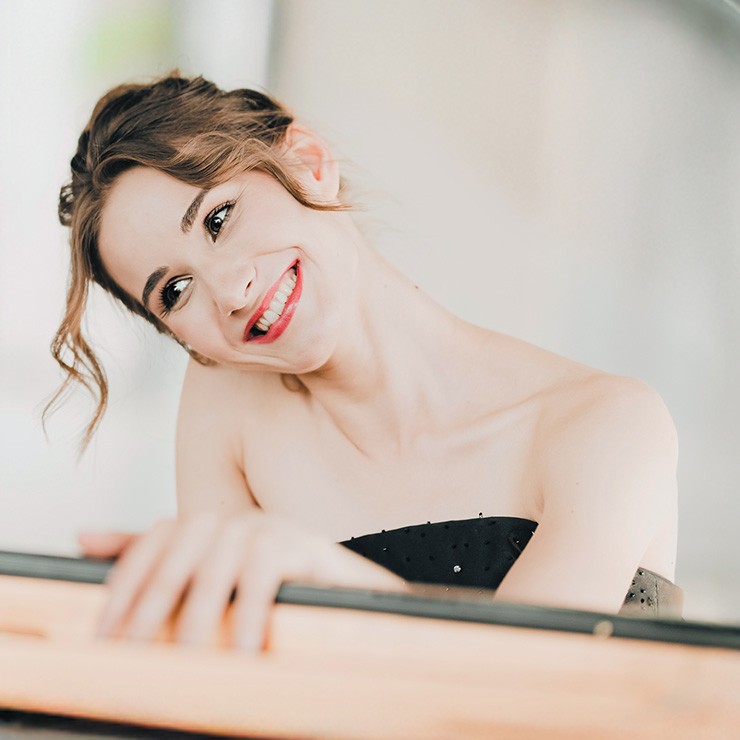
Aurēlija Šimkus. Vienna Carnival
Participants
Aurēlija Šimkus, piano
Programme
Joseph Haydn, Ludwig van Beethoven, Robert Schumann, Johannes Brahms
Not even the German Romantic Robert Schumann could resist Vienna’s charms. In the hope of finding better career opportunities, he spent six productive months in the city, giving concerts, composing, writing concert reviews and longing for his beloved Clara. He did return to Leipzig after all, but his experiences in the multicoloured metropolis are largely reflected in his musically colourful, contrast-rich and wistful five-movement piano cycle Carnival Scenes from Vienna. Meanwhile, the older Viennese classic Joseph Haydn’s early Piano Sonata in C minor (XVI:20) stands out with its dramatic mood and atypical use of form, which is why it is often referred to as the most Beethoven-like of the old master’s piano works. Another work that helps us appreciate the similarities and differences between the piano compositions of these two Viennese classical masters is Ludwig van Beethoven’s Piano Sonata No. 31, his penultimate one. It was written at the same time as his Missa Solemnis, and perhaps that is why it is so full of recitative and singing elements, which blend marvellously with pianistic virtuosity and solemnity of expression, compelling elegy and lyricism. The Four Pieces for Piano, Op. 119 by romantic composer Johannes Brahms, filled with light melancholy and playfulness, as well as fiery passion and tenderness, can also be considered late works. These four masters’ piano works have been arranged into a single concert programme by the young pianist Aurēlija Šimkus. Having honed her skills not only in her homeland, but also in Italy, Sweden and Germany, the young artist has already received several significant awards, including the prestigious Echo Klassik, and has thrilled audiences across Europe with her carefully considered and finely nuanced interpretations.
Informācija
| Event: | 2 daļas |
| Duration: | 2h |
| Café: | available |
